A third-generation Kelowna entrepreneur is taking love story submissions until November 14. Then they grow.
Peonies came to Kelsey Kitsch in a dream. She woke up, she says, ran the numbers, did the market research, "and bam: wide open market."
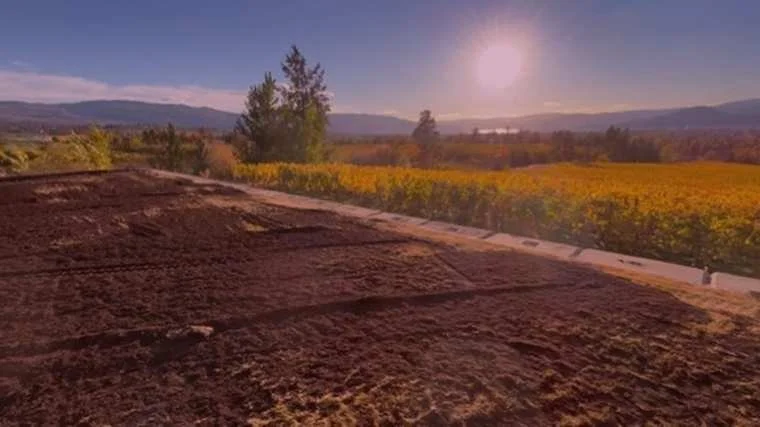
This fall, at the Kitsch Estate in Kelowna, she is planting 1,667 peonies along with love stories submitted by the public. Yes, YOU.
Every story is catalogued, so you'll know exactly which flower is yours. And you can opt in to an email letting you know when it blooms. The deadline is November 14.
(Already convinced? Submit now).
Who is planting them
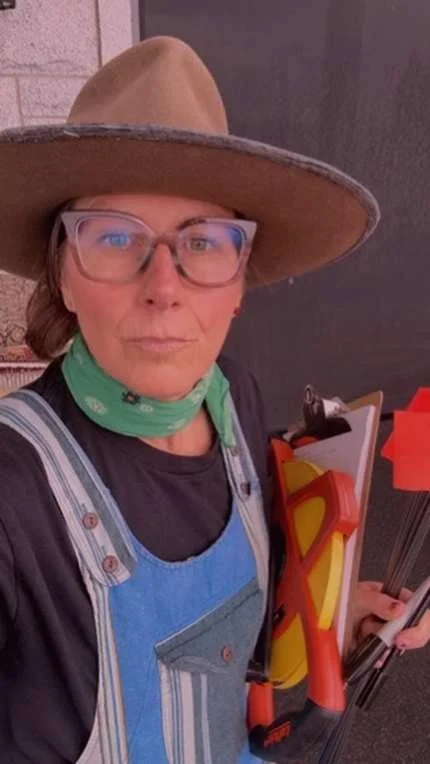
The Kitsch name has been in the valley for about a century. Her grandfather, Rudy Kitsch, started Rudy's Taxi in the late 1930s, which a 2015 profile called Kelowna's first taxicab stand. Her father, Bruce, grew up delivering fruit to the packing house with Rudy, then went into civil construction, building roads and bridges in remote parts of northern BC, and Kelsey grew up on his job sites. "I know how to build roads and bridges," she said in the same profile. "I had learned that from the ground up." As Kelsey Ramsden, the name she built her companies under, she started a construction firm of her own and was twice named Canada's #1 female entrepreneur. She has since gone back to Kitsch, her family name, and founded Paramount Love.
The Kitsch Estate is the family's land in East Kelowna, where their 10,000-square-foot home, the Granite Chateau, sits above the vines. Until 2013, it was an old, unhealthy apple orchard. That year her younger brother, Trent, who co-founded the men's underwear brand SAXX, and his wife, Ria, started planting grapes, and they made the first vintage of Kitsch Wines in 2015. They cut production back in 2022, then closed the tasting room for what they called "a family sabbatical." Now the estate is getting peonies. "I exist because of this place," she says. "This is where the love story that brought my father to life, and me to life, played out."
“I exist because of this place.”
Kelsey Kitsch
The field, right now
In November, a peony field looks like nothing much. The plants go in as bare roots: a knuckle of crown with a few dark red buds that growers call eyes, set no more than two inches under the soil so the stems can find their way up. Then the field sits through the winter, which is what a peony wants. It needs a stretch of cold to bloom.
In early spring, the first sign is a cluster of deep burgundy spears, one for every eye, that the Chicago Botanic Garden says look like "alien asparagus pushing their way out of the ground." They unfurl into leaves, then buds, and herbaceous peonies bloom in May or June. Those who submit their love stories to this project have been promised an email in 2027, when their peony flowers.
She wondered what would make them grow best. Then she remembered "some old story about a Japanese scientist who spoke kindly to some water and mean to other water."
The scientist was Masaru Emoto, a Japanese author with a doctorate in alternative medicine. In Messages from Water, published in 1999, he described exposing water to words, music and pictures, freezing it, and photographing the ice. Water spoken to kindly, he said, froze into "pleasing" crystals, and insulted water into "ugly" ones. His best-known test used cooked rice in three jars: one thanked every day for a month, one insulted, and one ignored. He reported that the thanked rice fermented with a pleasant smell, the insulted rice turned black, and the ignored rice rotted. His book The Hidden Messages in Water became a New York Times best seller.
This reminds me of a story I wrote for VancityBuzz in 2015 about whether playing classical music while making wine changes its taste. George Hanson of Seven Stones Winery, in the Similkameen, piped baroque music to the barrels in his wine cave 24 hours a day. He had built the cave in honour of his late wife, who didn't live to see it finished, and he believed the music would age the wine faster and better. I asked him whether music could really change wine. He talked about vibration for a while, then allowed that he might be wrong. "If my intuition and the studies are wrong," he told me, "then we just have to listen to music, and that is good for us as well." Hanson died in 2021, two years after he put the winery up for sale.
Back to Kelsey, who says she asked herself: "what makes everything grow better? Humans, plants, ideas... love! Why not have a field of love growing flowers for generations?"
What you get
Modern love, she wrote in her newsletter, Liberation Letters, is "more fragile because it lives on a phone." Love stories don't get written down like they used to.
With Love Story Peonies, anyone can send a love story, from friendship or family love, to long marriages or love lost.
Kitsch pictures couples marrying among the stories one day, and stems cut from the field ending up on kitchen tables.
Will her own story be told, I asked?
"Yes," she says. "It's about the opportunity to be alive, to experience love. My love story is to love itself. There's nothing quite like it. In my life, when I have been at my lowest, whether it has been through my divorce, cancer, loss, grief, you name it, the thing that always gave me hope came from love. And the brightest moments of my life: love. You can say I love love. Not for the sake of it, but for the depth and truth of it, in all ways.
“My love story is to love itself.”
Kelsey Kitsch
